Epoxy & resin flooring materials
Section A–AEleven materials.
Two millimetres.
A resin floor is not a colour on a slab, it is a laminate, and everything that matters about it is decided in a thickness you could cover with a business card. Every material here can be checked on a floor that is already finished, and each one tells you how.
IGoes down
Four liquids, laid wet on wet, that together stand no thicker than three bank cards stacked up. Each one is doing a job the one beneath it cannot, which is why leaving any of them out shows up as a different failure.
010.00 – 0.20 mm
Moisture-barrier primer
Thin enough to soak into the profile the grinder cut, and hard enough once it is in there to stop water vapour from the ground pushing up through everything above it.
- Film
- 200 µm
- Holds to
- 95% RH
- Overcoat
- 16 h max
020.20 – 2.00 mm
100% solids epoxy
The body of the floor, and the reason there is a floor rather than a colour. Nothing evaporates out of it, so what goes down wet is exactly what is there when it cures.
- Solids
- 100%
- Build
- 0.5 – 3 mm
- Compressive
- 70+ MPa
032.00 – 2.25 mm
Polyaspartic topcoat
The wearing skin, and the only layer anything ever actually touches. Aliphatic, so sunlight does not turn it yellow, and tough enough at the surface to take a hot tyre standing on it.
- Film
- 2 × 125 µm
- Yellowing
- ΔE < 2
- Gloss
- 15 – 90
040.00 – 9.00 mm
Urethane cement
The alternative floor, not another coat on this one: a trowelled screed four times thicker than the whole build beside it, for kitchens, dairies and wash bays where the cleaning is hotter than the resin can take.
- Build
- 6 – 9 mm
- Serves to
- 120 °C
- Steam clean
- Yes
Nothing here
is a paint.
The four coats above arrive as two or three separate parts, inert until they are put together. From the moment they are, the material is curing, whether it is on the floor or still in the pail.
- Mix ratio
- 3 : 1
- Pot life
- 25 min
- Per +10 °C
- ÷ 2
base to hardener
at 24 °C
pot life halves
Which is why a 34 °C afternoon in Nairobi leaves about twelve minutes between mixing a pail and it being useless. We mix smaller batches and put more people on the rake rather than thin the resin, because thinning it is how you get a floor that never fully hardens.
IIGoes in
These are not coats. They are broadcast or dosed into a coat while it is still live, and once the clock is running there is no second attempt: whatever went in is what you have.
 01
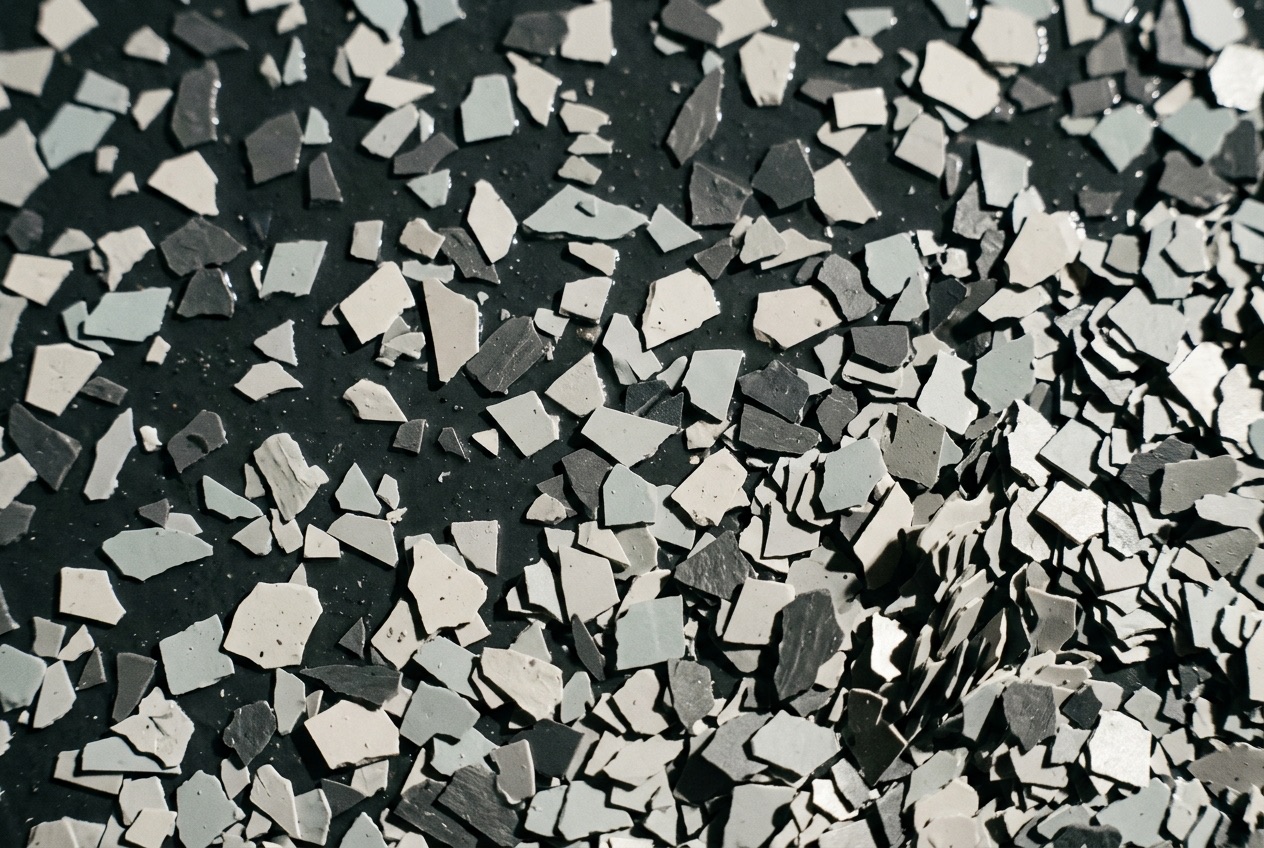
01Vinyl flake
Thrown into the wet base until the coat will not take any more, then ground back flat and sealed. The chip is what hides tyre marks, dropped tools and every future repair.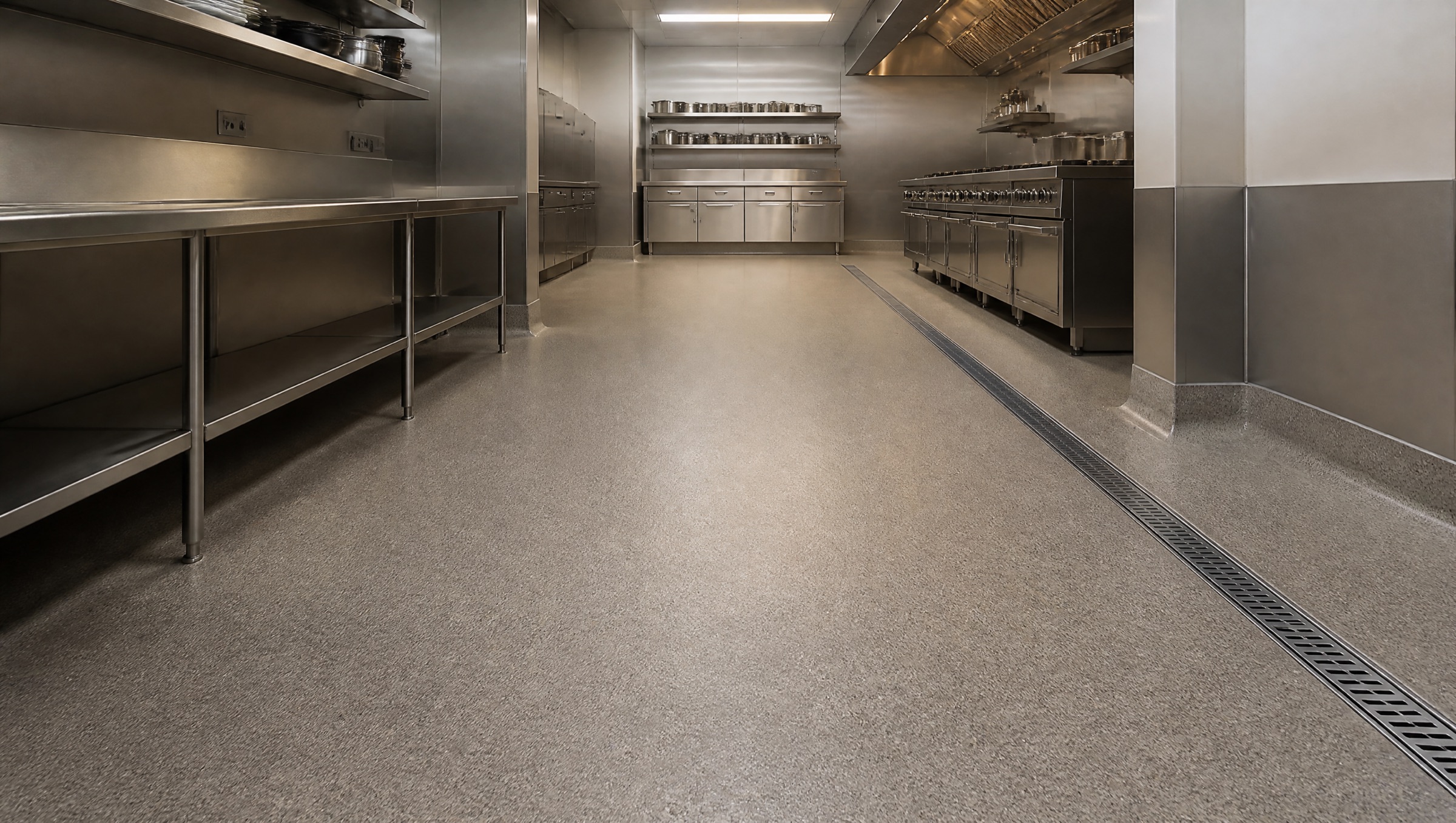 02
02Coloured quartz
Ten times the flake by weight, and the reason a quartz floor is a build rather than a finish. Two passes: the first fills the coat, the second fills the first.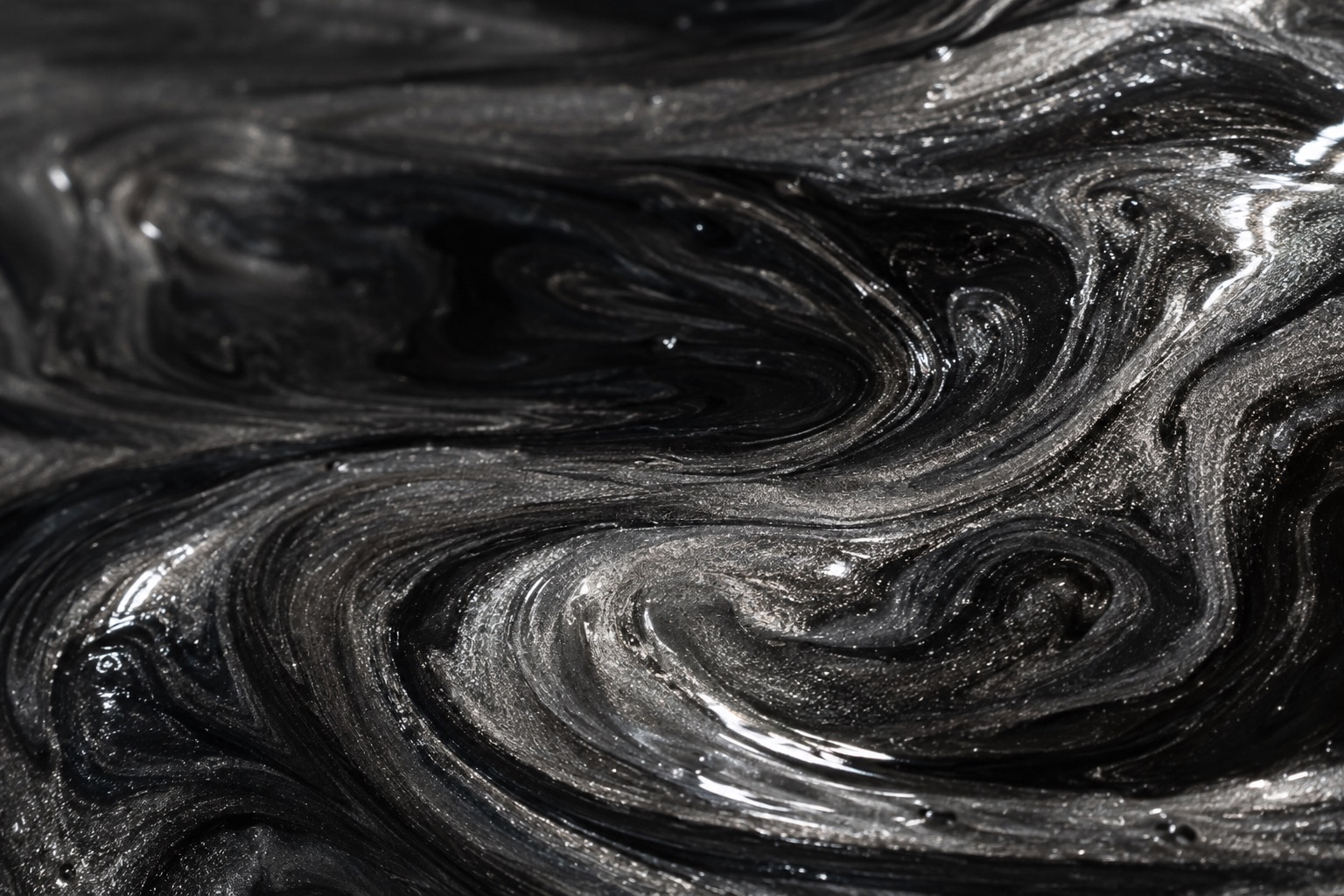 03
03Metallic pigment
Two per cent by weight into a clear resin, then moved with air and a torch while it is live. The movement is made in the twenty minutes the coat is open and cannot be adjusted afterwards.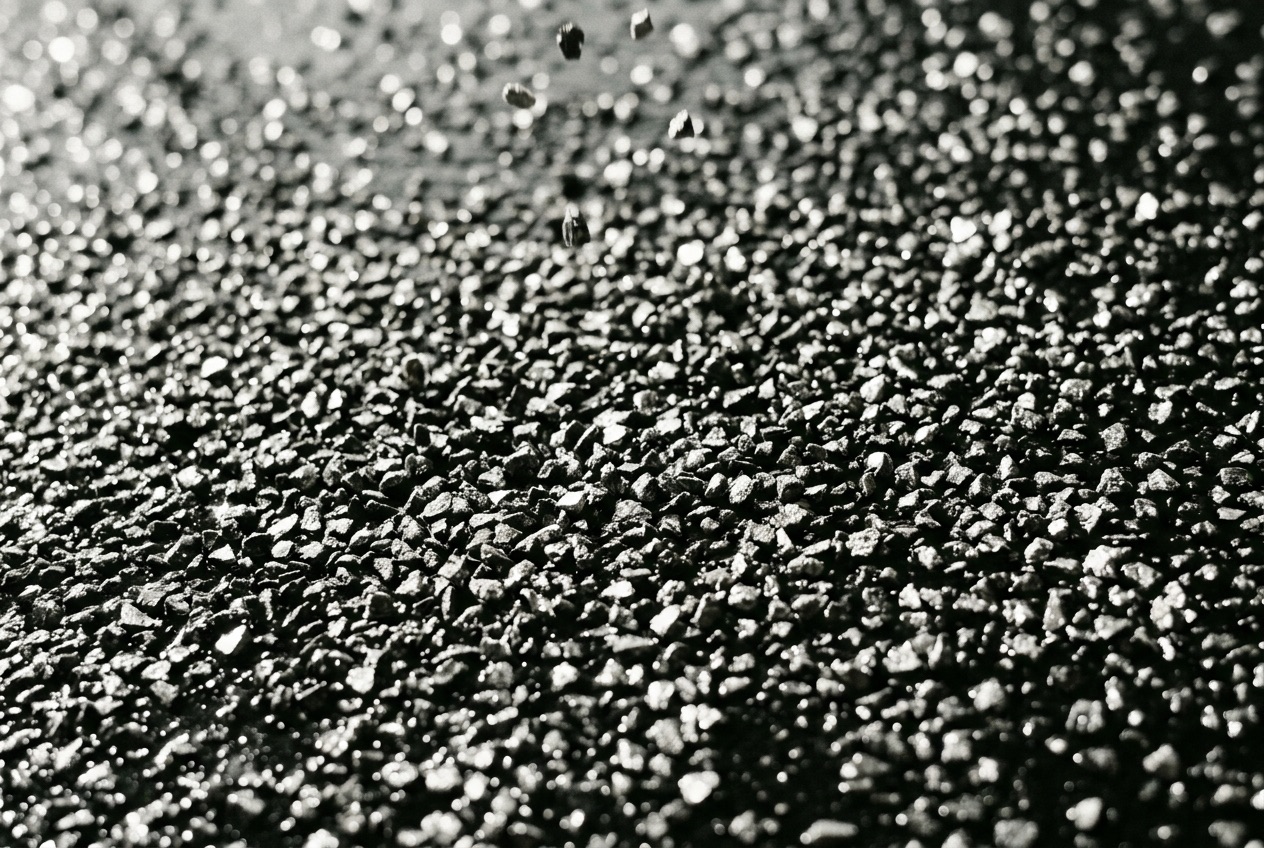 04
04Anti-slip aggregate
Broadcast into the topcoat on ramps, wash bays and anywhere a floor gets walked on wet. Harder than the quartz and far harder than the resin holding it, so it is still there when the gloss around it has gone.
IIIGoes around
The three nobody photographs. They go into the slab before the floor does, and a pour laid over the top of what they should have fixed will find the same crack again within a year.
Epoxy mortar
Solids epoxy gauged with kiln-dried silica sand
Resin cut with dried sand until it trowels like a screed, for spalls, blown patches and the crater under a rusted machine foot. It is a repair, so it is done before anything decorative is opened.
How to tellSix months in, a mortared repair is invisible. A repair filled with neat resin instead of mortar shows as a slightly different gloss in raking light, because a deep pour of unfilled resin shrinks as it cures and sinks a fraction below the floor around it.
- Ratio
- 1 : 3 by vol
- Min depth
- 6 mm
- Overcoat
- 12 h
Polyurea joint sealant
Rapid-set polyurea, Shore A 80
A movement joint has to keep moving. It is filled with something firm enough to carry a wheel across it but soft enough to stretch, and then it is carried up through the resin rather than buried under it.
How to tellLook for the joints. They should still be visible as lines on the finished floor. A floor poured straight over its movement joints hides them for about eight months, and then cracks along exactly where they were.
- Movement
- ±10%
- Shore
- A 80
- Cut in
- 60 min
Crack-chase resin
Low-viscosity epoxy, gravity fed
Every static crack is cut out with a chase blade first, then flooded with a resin thin enough to run to the bottom of the cut. Filling a crack without opening it up only bridges the gap.
How to tellA chased crack is a straight cut line, 6 mm wide, usually slightly darker. A crack that was painted over is not straight; it wanders, because cracks do, and in two years it will be a visible line again in the same place.
- Chase
- 6 mm deep
- Viscosity
- ~150 mPa·s
- Grind back
- 30 min
IVWhat we will not use
Three things that turn up on most cheap quotes for this work. Each one does something; none of them does the thing it is being sold as doing.
Solvent-thinned epoxy
Sold at 50 to 70 per cent solids, so a third to a half of what you pay for leaves the floor as vapour. The film shrinks as it goes, and it takes the gloss and a good part of the thickness with it.
We use100% solids epoxy
Water-based garage kits
The tin that covers a double garage for the price of a tank of fuel. It is roughly 40 per cent solids and lays down thinner than a sheet of paper, which is why it peels off in strips with the first hot tyre.
We use100% solids epoxy
Acid etching
An hour with a watering can instead of a day behind a grinder. It roughens the cement paste and leaves the profile far shallower than resin needs, plus a residue that has to be neutralised and never fully is.
We useDiamond grinding